
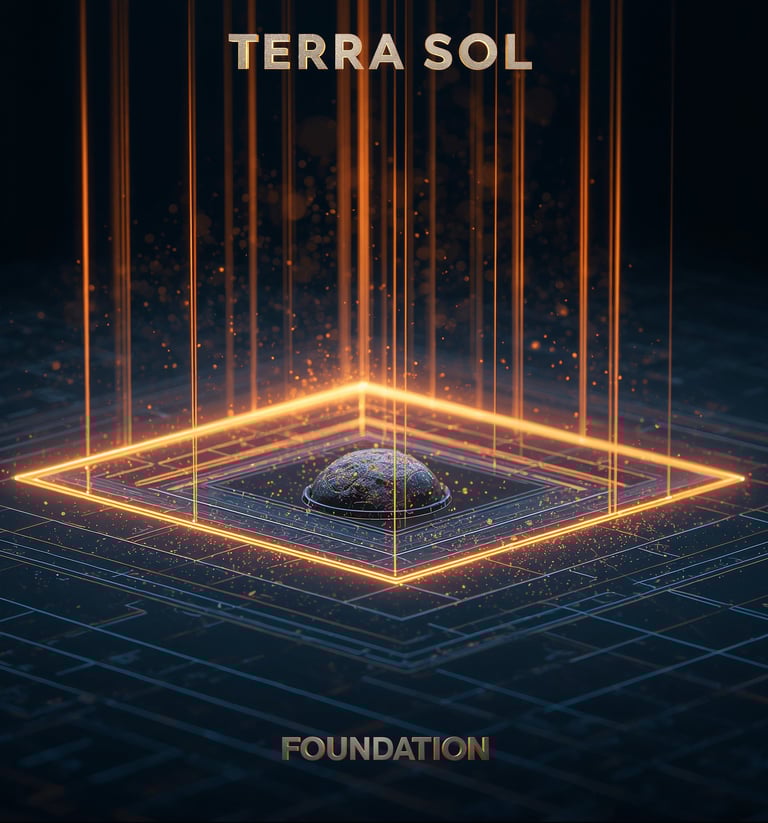
In the half-light before dawn, a melody exists that no one has yet heard. A wooden flute plays six notes—simple, inevitable, as if they've always been waiting in the silence. This is how Foundation begins: not with arrival, but with listening.
What follows is a 48-minute meditation on what it means to build when you don't yet know what you're building for. A lone architect (soprano) hears the flute's melody and begins to translate sound into structure, vision into blueprint. She gathers workers—their hands dark with earth, their breath becoming rhythm—and together they dig. They place a cornerstone with ceremony. They climb scaffolding toward sky, discovering that the foundation they're building rises with them.
At the height she's climbed, she learns she is not alone.
Another voice arrives—crystalline, singing quarter-tones that fall between our familiar notes, using no vibrato, sounding almost human but not quite. They teach each other sounds. They discover they can breathe the same sacred syllable—OM—though they shape it differently. For eight minutes, two beings find the rhythm where their different pulses can dance together. They learn each other's names: "Hello." "Hello."
Then the storm. Chaos strips away the OM they'd learned, and she loses herself in arhythmic terror until the other voice cuts through the noise, singing her own blueprint melody back to her: I remember your song. Follow my voice. Together they search for heartbeat in catastrophe—60, 80, 100, 140 beats per minute—building the pulse that saves them. The storm passes. They didn't abandon each other.
TERRA SOL "FOUNDATION" - ALBUM CONCEPT
Morning after. She sits alone assessing damage, voice raw, foundation tested. Just cello and her exhausted testimony: Small hands building / Under infinite sky / Still, we build. Not triumphant. Just here. Still standing.
Then everyone gathers—all who labored, all who witnessed, all who believed—approaching the threshold of what they've built together. She speaks one word: "Together." They cross as one organism, and the acoustic space transforms. Inside, she sings every melody that came before—the blueprint, the cornerstone blessing, the contact song, the survival testimony—naming the building's memory, giving it soul. Celebration erupts: hand claps, spinning, joy in completion.
The final sound is not a climax but a convergence: her voice, the choir, and briefly—barely audible—the other voice returns, harmonizing in quarter-tones. All beings breathing together for forty-five seconds. Her last sound is not a note but an exhale, natural and unprocessed. The work transcends its builders.
Silence.
Foundation doesn't answer what happens next. It ends at the threshold, trusting you to imagine what might grow from what we've built together. This is music for the moment when everything changes—when you discover you're not building alone, when you learn that foundations aren't endings but beginnings, when small hands under infinite sky prove sufficient for the work ahead.


Before words. Before voice. Before even the thought of building.
Dawn arrives witnessed only by wind and waking birds. From the half-light, a wooden flute emerges playing six notes—E, G, A, B, A, G, E—a melody that seems to have always existed, just waiting to be discovered. Three times the flute sings it, each iteration clearer than the last, like sun rising by degrees. This is the seed from which everything grows. This is the first illumination.
Listen closely. By the album's end, you'll recognize this melody as the foundation's memory, planted before humans arrived. We don't create music. We listen, and we discover.
Solo bansuri flute, field recordings. The world breathing before we arrived.
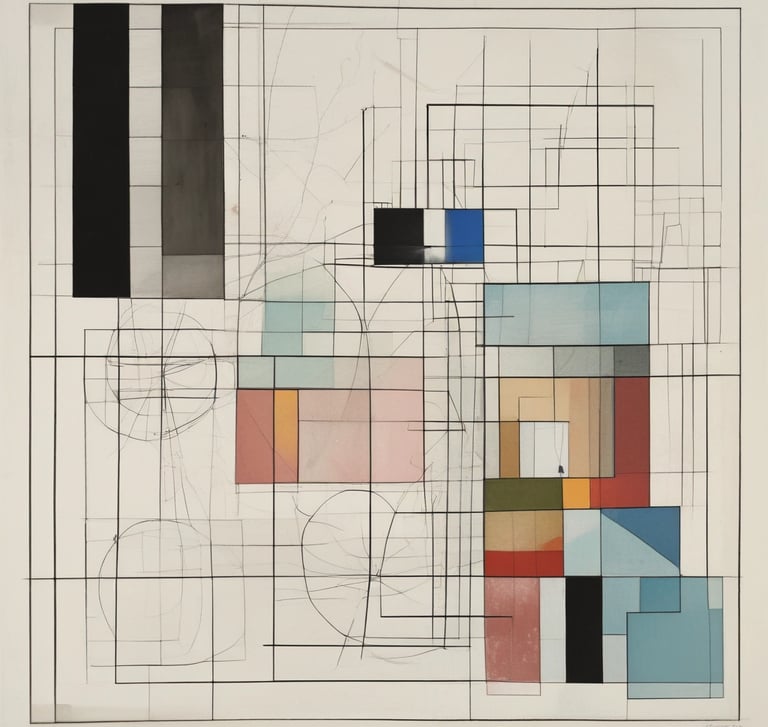
She hears it in her mind—not a building, but a sound.
The architect sits alone with prepared piano and the rhythmic clicking of her typewriter, translating vision into blueprint. She hears the dawn's melody and begins to answer it, her voice rising wordless and searching, humming the structure that wants to exist. The blueprint glows with inner light on her desk. She doesn't know yet what she's building—only that it must be built, that something beyond her understanding has asked this of her.
The piano notes are measured, intentional. The typewriter marks time. Her voice spirals upward, testing the architecture in sound before it becomes stone. This is the moment vision becomes intention, when the impossible begins its slow transformation into the inevitable.
Soprano, prepared piano, violin rhythm. The vision made audible, the first human voice on the album.
"BLUEPRINT (THE VISION)"
"THE DIG (HANDS IN EARTH"
Now comes the sweat.
Shovels bite earth. Hammers ring steel. Ten bodies move in accelerating rhythm—frame drums from Ireland pulse the heartbeat, djembe from West Africa weaves syncopation, while construction sounds become music: tuned I-beams sing metallic melody, wooden planks crack accents, bowed saw blades sustain eerie tension. Workers grunt with effort, their breathing becoming percussion, their exhaustion becoming prayer.
The tempo climbs from measured to ecstatic—60, 70, 90, 140 beats per minute of pure human endurance. At the peak, everything converges: hammers, drums, stomping, breathing, a single sustained shout of exertion. Then collapse. Silence except for ten people breathing, bodies recovering, tools dropping.
They are still standing. The hole is dug. Tomorrow they'll return and dig deeper. This is what labor sounds like when it becomes sacred, when the work itself is the offering.
Global percussion, construction workers' voices and tools. Work as prayer, exhaustion as communion.
"CORNERSTONE (THE SACRED PLACING"
The foundation cannot begin without ceremony.
In slow processional, the community walks toward the site where the first stone will be placed. Among them, a voice rises—the architect, now priestess, teaching them the sound that will bless what they've built. OM: AAAA-UUUU-MMMM, one breath held for thirty seconds. She demonstrates. The choir learns, their voices imperfect but earnest, some holding twenty seconds, others twenty-five, together creating a breathing organism.
Strings sustain beneath like bedrock. A French horn calls from distance. She speaks three words: "It is begun." A gong seals the dedication with single decisive tone. The cornerstone settles into earth—you hear the weight, the finality. The building has a soul now. What was vision, what was labor, becomes sanctuary.
Soprano, chamber choir, string quartet, frame drum, French horn, gong. The sacred made physical, breath made blessing.
"THE ARCHITECT DREAMS"
Alone now, away from the ceremony and the watching eyes.
She returns to the cathedral of her own breath, humming softly in vast space, testing her courage. After leading the public OM, she faces private doubt: Can I do this? Am I enough? Her voice tries the sacred sound again—imperfect this time, only twenty-four seconds before her breath runs out. She falters.
Then, from two octaves below, a cello enters like bedrock beneath her fear. Grounded by this foundation, she tries again. Thirty seconds. Complete. She exhales, and in that release discovers she's ready for what comes next—not because doubt is gone, but because she's learned to build even when uncertain.
This is the album's quietest moment, its most vulnerable. Just one voice and one string, asking the question every builder asks in darkness: What if I fail? The cello answers: You're not alone, even here.
Solo soprano, solo cello. The priestess alone with doubt, finding ground beneath fear.
"THE SCAFFOLD (THE CLIMB)"
She must climb higher than she's ever climbed.
The scaffold rises in unstable 5/4 rhythm—one beat too many, perpetual forward-falling as she ascends rung by rung. From the earth below, a voice calls: Tuvan throat singing, a fundamental drone at 130 Hz, the voice of gravity saying stay safe, stay grounded. But she climbs anyway.
And discovers—the foundation follows her upward. The throat singer's overtone whistle rises to meet her pitches, singing the same vowels she sings: Ahhhh, Ohhhhh, Eeeeeee. Earth and sky aren't opposites but partners, speaking one language across three octaves. At 140 beats per minute, both voices whirl in ecstatic 6/8, reaching high C together—her stratospheric soprano, his fundamental bass three octaves below, his overtone whistle joining her at the peak.
She descends transformed. Still herself, but now knowing: the ground she thought she left behind has been climbing with her all along.
Soprano, Tuvan throat singer, string quartet, frame drum, finger cymbals. Fear becoming flight, earth teaching sky they're one voice.
"FIRST LIGHT (REPRISE): WE ARE SEEN"
At the height she climbed to reach, she finds she is not alone.
Another voice—crystalline, using quarter-tones that fall between our piano keys, singing with no vibrato, sounding almost human but not quite. They are cautious at first, teaching each other sounds: "Ahhhh?" "Ahhhhh." She offers OM shaped by her tradition—thirty seconds, vibrato, equal temperament. The other offers OM shaped differently—quarter-tone flat, no vibrato, forty-five seconds, a breathing pattern syncopated against hers.
They find the rhythm where their different pulses can dance. At seven minutes, they soar together in unison—her B-natural against the other's D-quarter-flat, creating a cluster chord suspended between worlds, shimmering with harmonic beating. Two voices, two worlds, one breath.
Then, barely audible, the first language they share beyond music: "Hello." "Hello."
We are seen. We are not alone. First contact happened not through technology but through voice, through the simple sacred act of breathing together.
Two sopranos, wooden flutes, string quartet, waterphone, percussion. First contact through OM, the universal sound.
"THE STORM WE SURVIVED TOGETHER"
The storm arrives without warning.
Arhythmic chaos—percussion striking with no pulse, strings screaming dissonance, bowed cymbals howling like wind. She tries to find the OM that grounded her, but chaos drowns every attempt. Her voice breaks: "OM!... OM!... Ah!" She is lost.
Then, distant, cutting through the noise: the other voice singing her blueprint melody, the song from the very first dawn. "I remember your song. Follow my voice." They find each other in the storm's center. Together they search for heartbeat in catastrophe—60, 80, 100, 140 beats per minute, building the pulse that saves them.
At 140 BPM they dance, both voices celebrating not triumph but survival: We didn't abandon each other. The OM completes, imperfect but unified. Exhausted breathing. They endured.
This is the crisis that proves the bond. Not the contact moment but the storm survived together. The test that matters isn't meeting but staying.
Two sopranos, arhythmic chaos transforming to unified rhythm, full percussion. The crisis that proves love isn't meeting but staying.
"STILL STANDING"
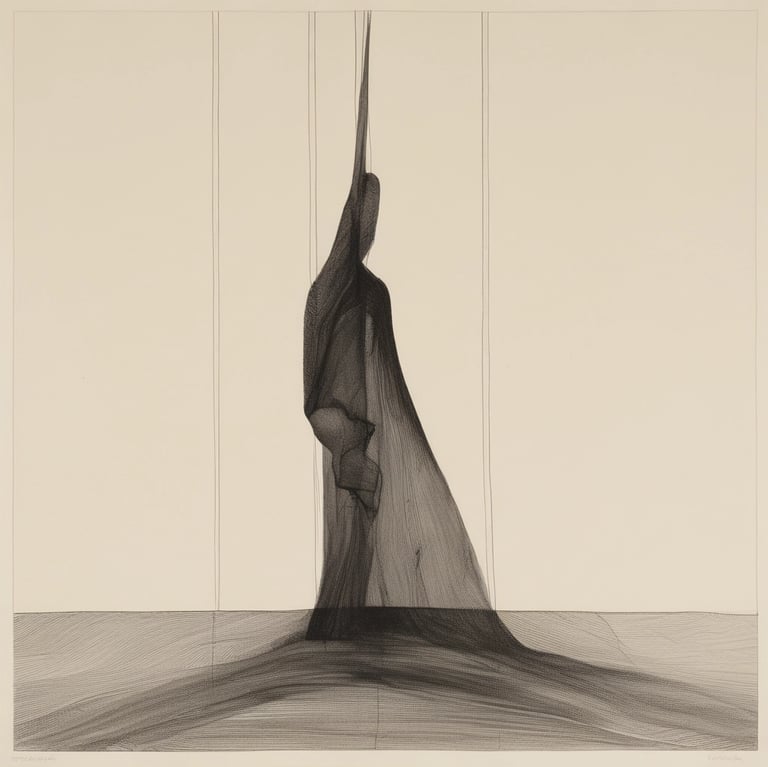
"THRESHOLD (THE DEDICATION)"
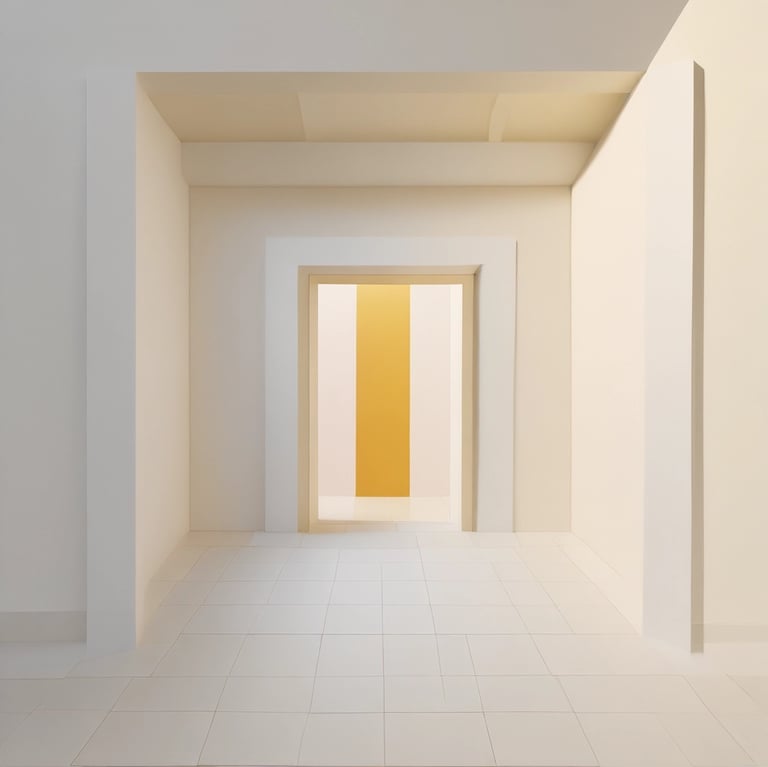
"FIRST LIGHT"
Morning after. Bodies aching. Foundation tested.
She sits alone with damage assessment, just cello and voice. She hums with closed lips, testing if sound still works. Opens to "Ahhhh." Then she speaks—not singing but speaking, three lines that contain everything this album knows:
Small hands building
Under infinite sky
Still, we build
Not triumphant. Just tired truth. Small hands, not mighty. Still building, not "we built." Under infinite sky that dwarfs our efforts. And yet: we build.
At four minutes, distant humming rises. The choir returns, barely audible, not rescuing but witnessing. She is not alone. She never was. Her final sound is simply breath, natural and unprocessed—no vibrato, no performance, just human exhale.
This is the album's thesis. Not glory but persistence. Not triumph but presence. After the storm, after exhaustion, after doubt: still here, still building, still breathing.
Solo soprano, solo cello, chamber choir entering at 4:00. Defiant vulnerability, humility that refuses to quit.
Everyone gathers for the crossing.
All who labored, all who witnessed, all who believed approach in slow processional. At the threshold, she speaks one word: "Together." Five seconds of held breath. Then everyone steps as one organism, and the acoustic space transforms—you can hear we've entered what we built. The reverb expands. We're inside now.
She sings all the melodies that came before: the blueprint vision, the cornerstone blessing, the contact song, the survival testimony. Each memory names the building's soul. Then celebration erupts—hand claps, finger cymbals, 12/8 dancing at 90 BPM, joy spinning through completed space.
The final OM: her voice, the choir, and briefly—barely audible, a gift—the other voice returns, harmonizing in quarter-tones. All beings breathing together for forty-five seconds. Human and other. Earth and sky. Vision and labor. All converging in one exhalation.
Her final sound is not a climactic note but a breath—natural, unprocessed, human. The work transcends its builders. The building belongs now to all who enter.
Silence. We built this. Together. For tomorrow. For all who will come.
Soprano, Soprano 2 returning, chamber choir, full ensemble. The crossing into completion, the dedication that releases the work into the world.